


development
Space MAITRI
A pioneering Australian Indian Collaboration aimed at tackling space debris and promoting a sustainable space environment. Supported by the Australian Government and part of the ISI India Projects programme.
- Launch vehicle
- NSIL SSLV
- Launch
- 2027
- Orbit
- LEO
Overview
Supported by the Australian Government and part of the ISI India Projects programme, this initiative brings together Australian innovation and Indian spaceflight expertise.
This mission, named Space MAITRI मैत्री (Mission for Australia-India's Technology, Research and Innovation), marks a significant milestone in the strategic partnership between Australia and India in the space sector, fostering closer ties between commercial, institutional, and governmental space organisations from both nations. By focusing on debris management and sustainability, the mission aligns with the core values and objectives of both countries, promoting responsible space operations and addressing the growing threat of space debris.
Our mission will showcase technologies essential for space sustainability, featuring our Australian-built Orbital Servicing Vehicle, which will be integrated and launched in India. This partnership underscores our commitment to advancing space technology and strengthening ties between Australia and India.
The significance of 'MAITRI' — Sanskrit for friendship — as the spirit of this international effort will be reflected in our Australian and Indian partners on this mission.
Mission Goals
Demonstrating On-Orbit Servicing and Space Debris Mitigation.
Space MAITRI is an Australian-led joint project between Australian and Indian organisations, focused on demonstrating technologies to support sustainable space operations.
The initiative aligns with the objectives of the International Space Investment (ISI) India project grants scheme, enabling Australian industry to undertake ambitious collaborative space projects while fostering valuable commercial connections with the Indian Space Research Organisation, the Indian space industry, and Indian academic institutions.
The mission aims to generate substantial economic value for the Australian space sector and economy, leveraging significant private co-investment from Space Machines Company and its partners. This co-investment amplifies Australian Space Agency grant funding, strengthening the long-term impact of this bi-lateral relationship with India.
Mission Operation
An Australian Orbital Servicing Vehicle Launched on a Dedicated Indian Launcher.
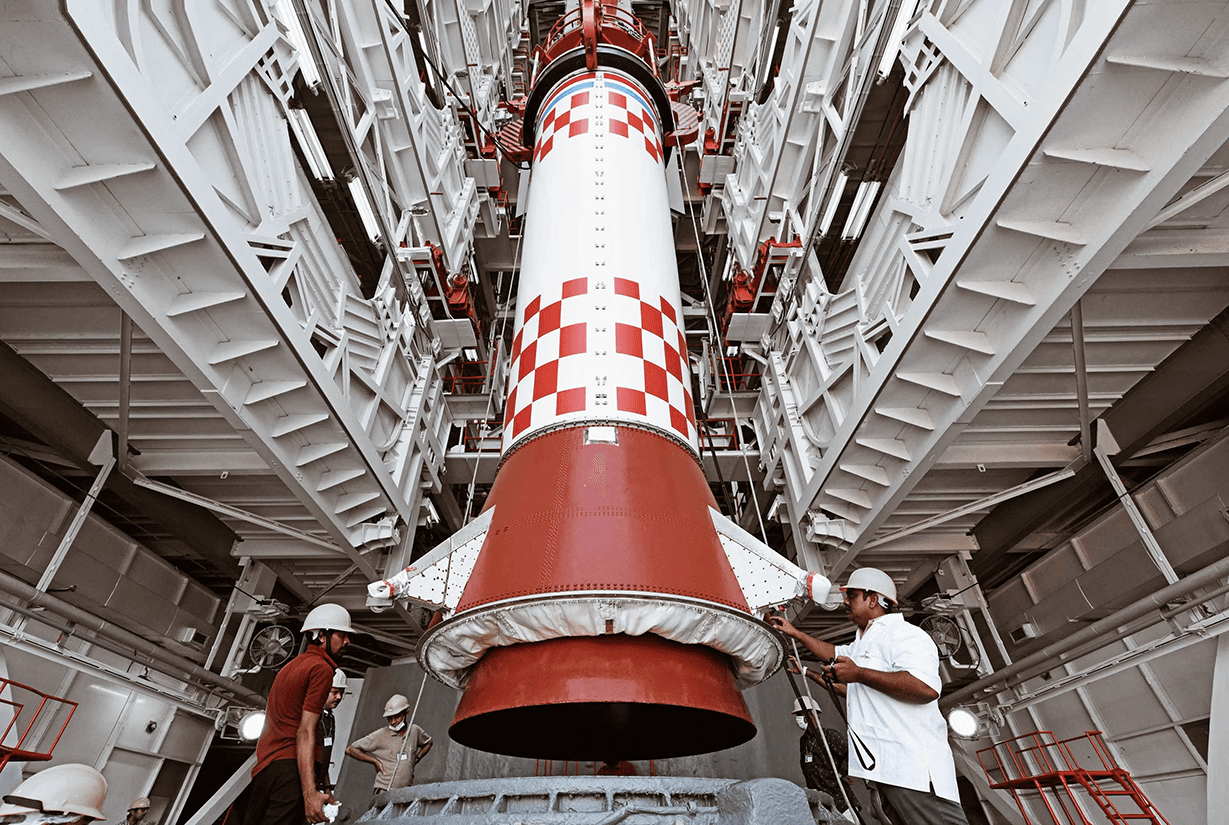
The SSLV launcher, operated by New Space India Limited (NSIL), will place the Optimus Orbital Servicing Vehicle into low Earth orbit (LEO). After separating from the launcher, Optimus will execute a series of propulsive Orbit Inspection Manoeuvres (OIM) to approach and closely inspect targeted assets or space debris.
Over several months, Optimus Viper will remain in orbit, examining space debris and showcasing space sustainability technologies, including those contributed by our mission partners. This on-orbit demonstration will validate both the technical feasibility and economic viability of affordable and accessible in-space servicing, effectively creating a “roadside assistance” service for satellites and other space assets.
This mission is a significant step towards ensuring space sustainability by demonstrating advanced capabilities in debris management and servicing, setting the stage for safer and more sustainable space operations.
Meet the partners
Bringing Together Leading Australian & Indian Partners
The Space MAITRI mission brings together several Australian and Indian partners, including Digantara, Ananth Technologies, The University of Adelaide, The University of Sydney, The University of Technology Sydney, LeoLabs, the Australian Strategic Policy Institute (ASPI), and Australian Astronomical Optics (at Macquarie University).
Space Machines Company's dedication to sustainable space operations underpins the mission. With the rapid increase in satellite launches by various organisations, the growing cloud of space debris orbiting Earth presents a mounting threat to future space missions and astronaut safety. Through this pioneering collaboration, Space Machines Company, NSIL, and mission partners will lead efforts to mitigate space debris, elevate global awareness, and advance in-space services, ensuring the long-term sustainability of space.










Cloud-based Orbital Robotics Laboratory — COROL
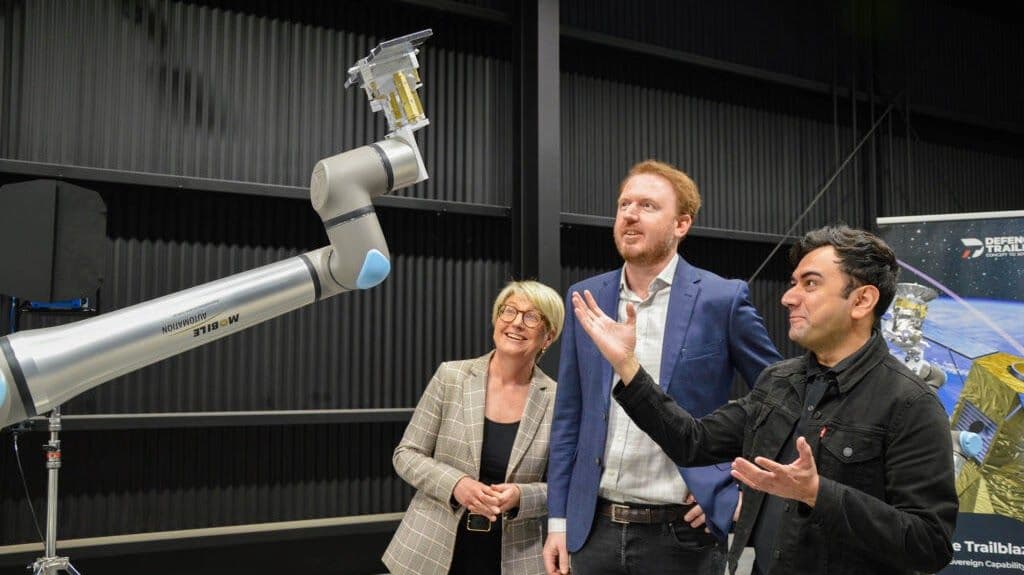
Adelaide University Cloud-based Orbital Robotics Laboratory (COROL) is a state-of-the-art orbital robotics testing facility that can emulate space-based rendezvous and proximity operation (RPO) flight dynamics right here on Earth. By combining robotic manipulation, realistic illumination and display simulation, tight environmental control, and high-precision motion tracking, COROL can emulate the motion, lighting and sensor conditions a spacecraft will face in orbit. COROL is the first of its kind in Australia to deliver an end-to-end solution for ground-based validation of spacecraft perception algorithms. The facility is developed via a collaboration between Adelaide AI for Space Group, Space Machines Company, Defence Trailblazer and SmartSat CRC Scarlet Laboratory.
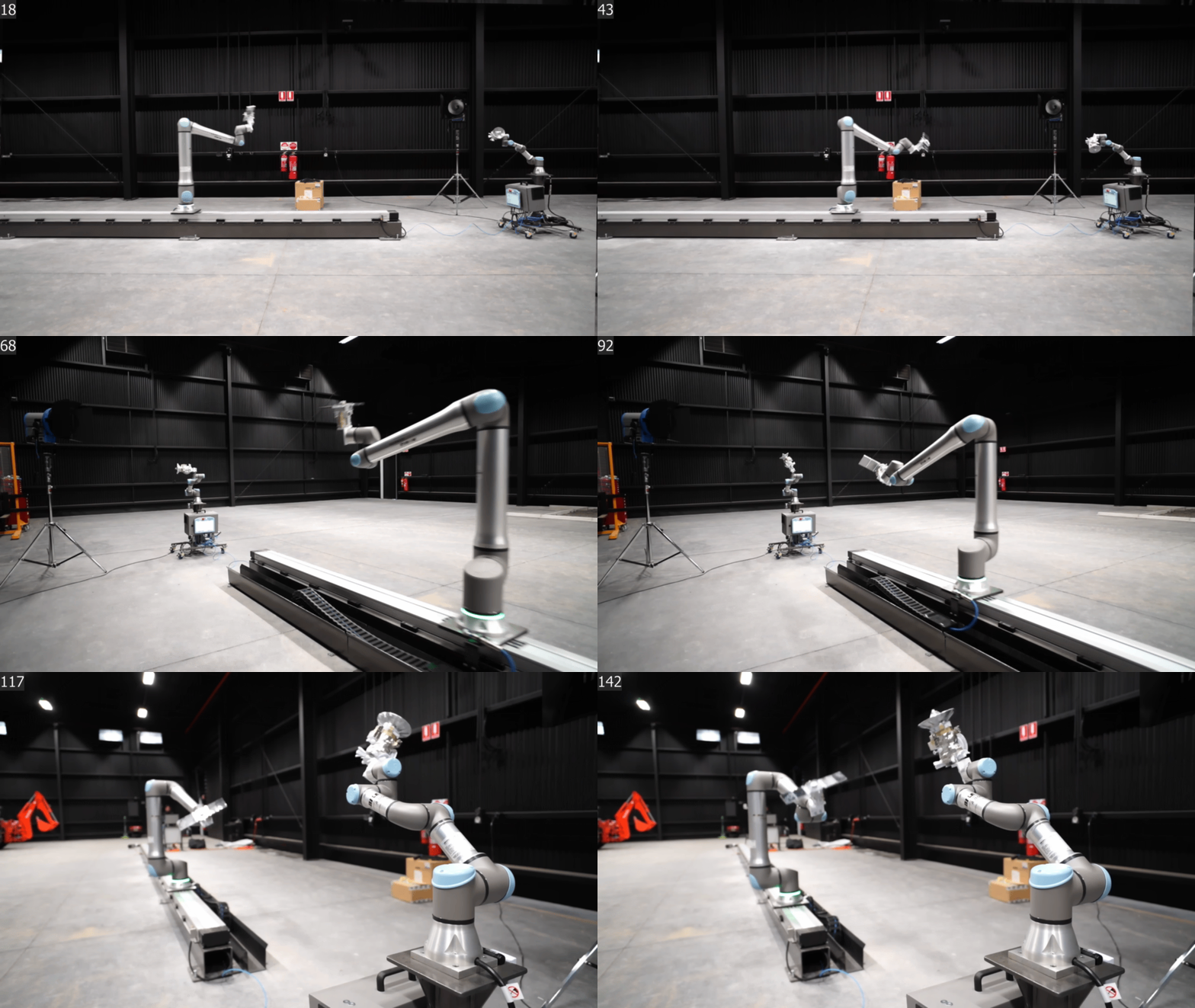
COROL Facility
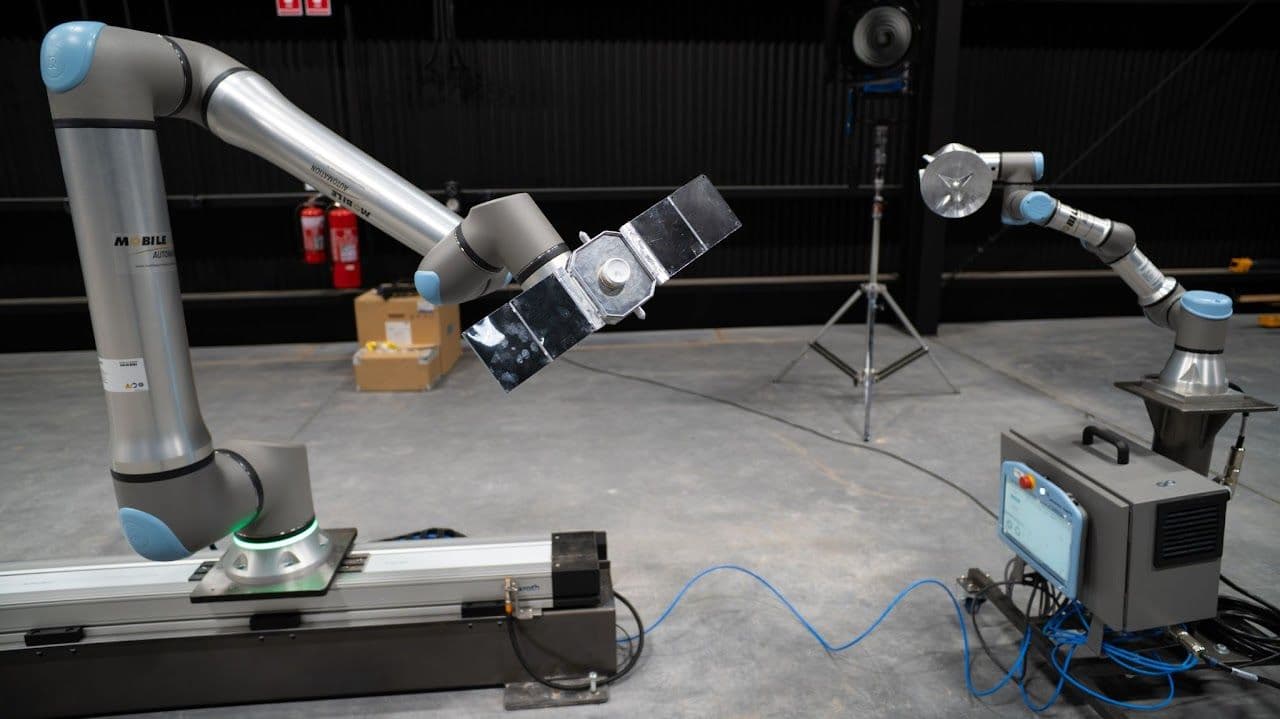
Hardware-in-the-loop Testing
Spacecraft perception and guidance, navigation and control (GNC) algorithms can be embedded in the RPO simulation to verify their operation. This weeds out potential mistakes and derisks the application of the algorithms in real RPO missions.

Data Collection for AI
Inside the tightly controlled environment, a suite of high-resolution cameras, depth sensors, and neuromorphic sensors capture target appearance under varying illumination, motion blur, and dynamic-range conditions to validate machine learning models for spacecraft perception.

Location and Remote Operation
COROL is located in the Exterres CRATER (Covered Regolith Analogue Terrain for Experimental Research) facility in Adelaide University Roseworthy Campus. The site is a short 50 minutes drive from Adelaide University North Terrace Campus in Adelaide CBD. In the near future, remote operations of COROL will be developed, and that will make it a truly cloud-based facility.
People and Expertise
COROL is developed and maintained by Adelaide AI for Space Group, led by Prof Tat-Jun Chin. The key researchers and collaborators are: Mr Mohsi Jawaid, Research Associate; Dr Marcus Märtens, Senior Research Associate; Mr Kevin Farries, Research Associate; Dr Yasir Latif, Senior Research Associate; Dr Carl Seubert, SmartSat CRC Scarlet Lab; Dr Hai-Tan Tran, Defence Science and Technology Group.

Tooling and Equipment
Sun simulators (ARRI M18 and ARRI M90). Controlled dark chamber. Motion capture and real-time monitoring. Multi-sensor calibration and data capture with synchronised ground-truth. Spacecraft mock-up fabrication (3D modelling and printing facilities). Multiple supported programming APIs including Python and C++.